

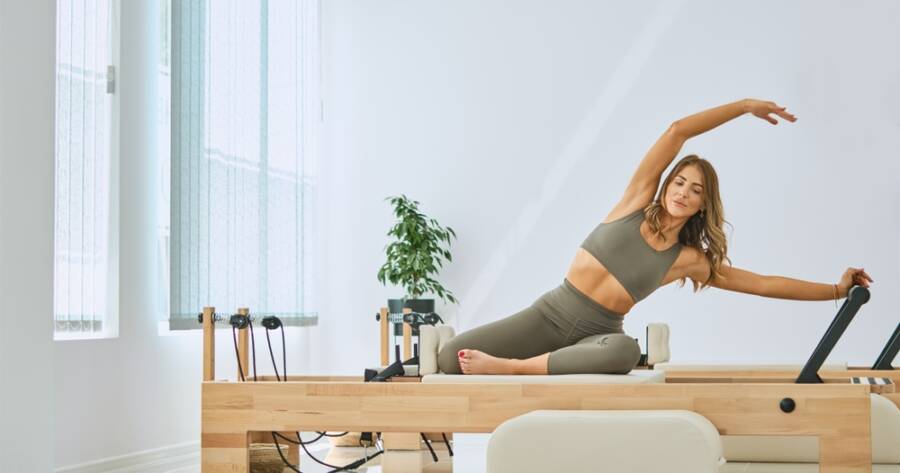
Pilates has become a staple in studios and home workouts alike, praised for its ability to build strength, improve posture, and enhance body awareness. Yet stepping into a studio can feel confusing when faced with options like mat classes or sessions on a sleek reformer machine. Both approaches share the same foundational principles of control, breath, and precision, but the experience and benefits can differ in meaningful ways depending on personal goals.
The Foundations of Pilates
Pilates was developed in the early 20th century by Joseph Pilates, who believed in strengthening the body through controlled, mindful movement. Core engagement, breath coordination, alignment, and fluid transitions remain central to the method, regardless of equipment. Each exercise emphasizes quality over quantity.
At its core, Pilates aims to improve muscular balance, posture, flexibility, and stability. Movements are typically low-impact, making the practice accessible to a wide range of fitness levels. Whether performed on a mat or a reformer, the philosophy remains consistent: deliberate motion, deep core activation, and a strong mind-body connection.
What to Expect from Mat Pilates
Mat Pilates is the original format and requires minimal equipment beyond a padded surface. Exercises rely primarily on body weight for resistance, challenging the core to stabilize the spine and pelvis throughout each movement. Small props such as resistance bands or Pilates rings may occasionally be added.
Because there is no external support from machinery, mat work demands strong engagement and body awareness. The simplicity also makes it highly accessible, allowing practice at home or in nearly any studio. Mat sessions are ideal for building foundational technique and learning proper alignment without distraction.
Understanding Reformer Pilates
Reformer Pilates uses a specialized machine featuring a sliding carriage, adjustable springs, straps, and bars. The springs create variable resistance, which can be increased or decreased to modify intensity. Movements often feel smoother due to the guided track of the carriage.
The reformer introduces both added challenge and support. Resistance can enhance strength development, while the machine assists with alignment and stability during certain exercises. This combination allows for a dynamic, full-body workout that can be adapted for beginners, athletes, or those seeking targeted muscle engagement.
Comparing Strength and Resistance
Mat Pilates builds strength primarily through body weight and controlled repetition. Deep core muscles, including the transverse abdominis, are consistently activated to maintain balance and stability. While effective, the intensity is typically moderate compared to weighted training.
The reformer, by contrast, allows for progressive overload through adjustable springs. Resistance can mimic traditional strength training while maintaining low impact. This makes reformer sessions particularly appealing for individuals seeking muscle endurance and greater resistance without high joint stress. Both formats strengthen the body, but the sensation and intensity can differ.
Accessibility, Convenience, and Cost
One of the greatest advantages of mat Pilates is its accessibility. A quality session requires little more than a mat and instruction, making it budget-friendly and easy to practice consistently. Online classes and home routines expand its convenience further.
Reformer Pilates usually requires studio access due to the specialized equipment, though you can buy a reformer for your home. Sessions may come at a higher price point and often involve smaller class sizes. While the experience can feel more personalized, access may be limited by availability or cost. Lifestyle preferences and scheduling flexibility often influence the decision between the two.
Injury Support and Body Awareness
Both formats are low-impact and can benefit joint health when performed correctly. Mat Pilates strengthens stabilizing muscles that support the spine and improve posture, which may help alleviate certain types of discomfort when guided by a qualified instructor.
Reformer sessions can offer additional support for alignment because the springs and carriage assist movement patterns. For some individuals recovering from injury, this guided resistance can feel more controlled. However, suitability depends on the specific condition and professional guidance. In either format, attention to technique remains essential for safe progression.
Choosing the Practice That Aligns with You
Both mat and reformer Pilates share the same core philosophy, yet they offer distinct experiences. Mat classes provide a strong technical foundation and unmatched convenience. Reformer sessions introduce adjustable resistance and a dynamic range of movement that can feel more strength-focused.
The right choice often depends on individual goals, preferences, and access. Some people enjoy alternating between both to benefit from foundational control and equipment-based challenge. Ultimately, consistency matters more than format. When practiced regularly, either approach can enhance strength, posture, flexibility, and body awareness in a sustainable way.