

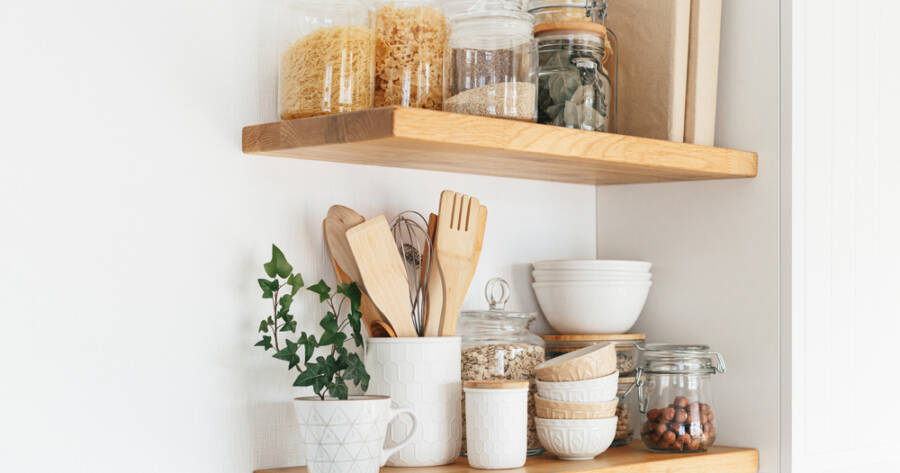
Open shelving has a way of transforming a space, making it feel lighter, more personal, and effortlessly curated. Yet without intention, it can quickly shift from styled to chaotic. The difference lies in restraint, balance, and thoughtful composition. When done well, open shelves become a quiet focal point, equal parts functional and decorative. With a few design principles in mind, shelves can feel elevated, cohesive, and far from cluttered.
Start With a Clear Vision and Cohesive Palette
Open shelving looks most refined when guided by a clear visual direction. A cohesive palette, whether warm neutrals, soft whites, or earthy tones, creates a sense of calm and continuity across each shelf. Without that foundation, even beautiful objects can feel disconnected.
Choosing a theme also simplifies decisions. When every item aligns with a broader aesthetic, styling becomes less about filling space and more about curating a story. Whether the goal is minimal, rustic, or modern, a consistent palette keeps shelves from feeling busy and ensures each piece contributes to an intentional overall look.
Limit What You Display for Maximum Impact
One of the most common mistakes is overfilling shelves. Open shelving thrives on restraint. Leaving space between objects allows each piece to stand out and gives the eye a place to rest. A few thoughtfully chosen items will always feel more elevated than a crowded arrangement.
Editing is key. Instead of displaying everything, select pieces that are either functional, beautiful, or meaningful. Removing excess instantly improves clarity. When each object has room to breathe, shelves appear more curated and less like storage, shifting the focus from quantity to quality.
Balance Scale, Height, and Visual Weight
A successful arrangement relies on variation. Mixing tall and short objects creates movement, while balancing heavier pieces with lighter elements prevents visual imbalance. Large items can anchor a shelf, while smaller accents add detail without overwhelming the composition.
Scale matters just as much as quantity. Too many tiny objects can blur together, while overly bulky items can feel heavy and cluttered. Aim for a mix that feels proportionate to the shelf itself. When height and weight are distributed thoughtfully, the entire display feels more dynamic and visually pleasing.
Mix Functional Pieces With Decorative Elements
Open shelving works best when it blends practicality with style. Everyday items like dishes, glassware, or books can become part of the design when arranged thoughtfully. Pairing functional pieces with decorative accents creates a lived-in yet elevated feel.
This balance keeps shelves from feeling overly staged. A stack of neutral plates beside a small vase, or a row of books paired with a sculptural object, adds both purpose and personality. When function and aesthetics work together, shelves feel natural rather than overly curated.
Use Grouping and Asymmetry to Create Interest
Grouping objects in small clusters helps create structure and cohesion. Arrangements of two or three items tend to feel more intentional than scattered single pieces. Grouping also allows for layering, which adds depth and dimension to each shelf.
Asymmetry plays an equally important role. Perfect symmetry can feel rigid, while a slight imbalance creates a more relaxed, designer look. Offsetting objects, varying placement, and shifting focal points from shelf to shelf encourages the eye to move naturally, making the display feel effortless rather than overly arranged.
Incorporate Hidden Storage to Reduce Visual Noise
Not everything belongs on display. Baskets, boxes, and containers provide a way to store everyday essentials while maintaining a clean aesthetic. Natural materials like woven seagrass or linen add texture while subtly concealing less attractive items.
This approach reduces visual clutter without sacrificing functionality. Items like pantry goods, bathroom essentials, or small accessories can be tucked away while still remaining accessible. By combining open display with hidden storage, shelves maintain a polished appearance while supporting everyday use.
When Less Truly Becomes More
Open shelving is less about decoration and more about curation. Thoughtful restraint, cohesive styling, and intentional placement turn ordinary shelves into a refined design feature. Each object earns its place, contributing to a look that feels calm and considered.
Over time, shelves can evolve naturally. Rotating pieces, editing regularly, and maintaining balance keep the space feeling fresh. When approached with care, open shelving becomes more than storage—it becomes a quiet expression of personal style, where simplicity creates lasting impact.